SUNY Press 2026
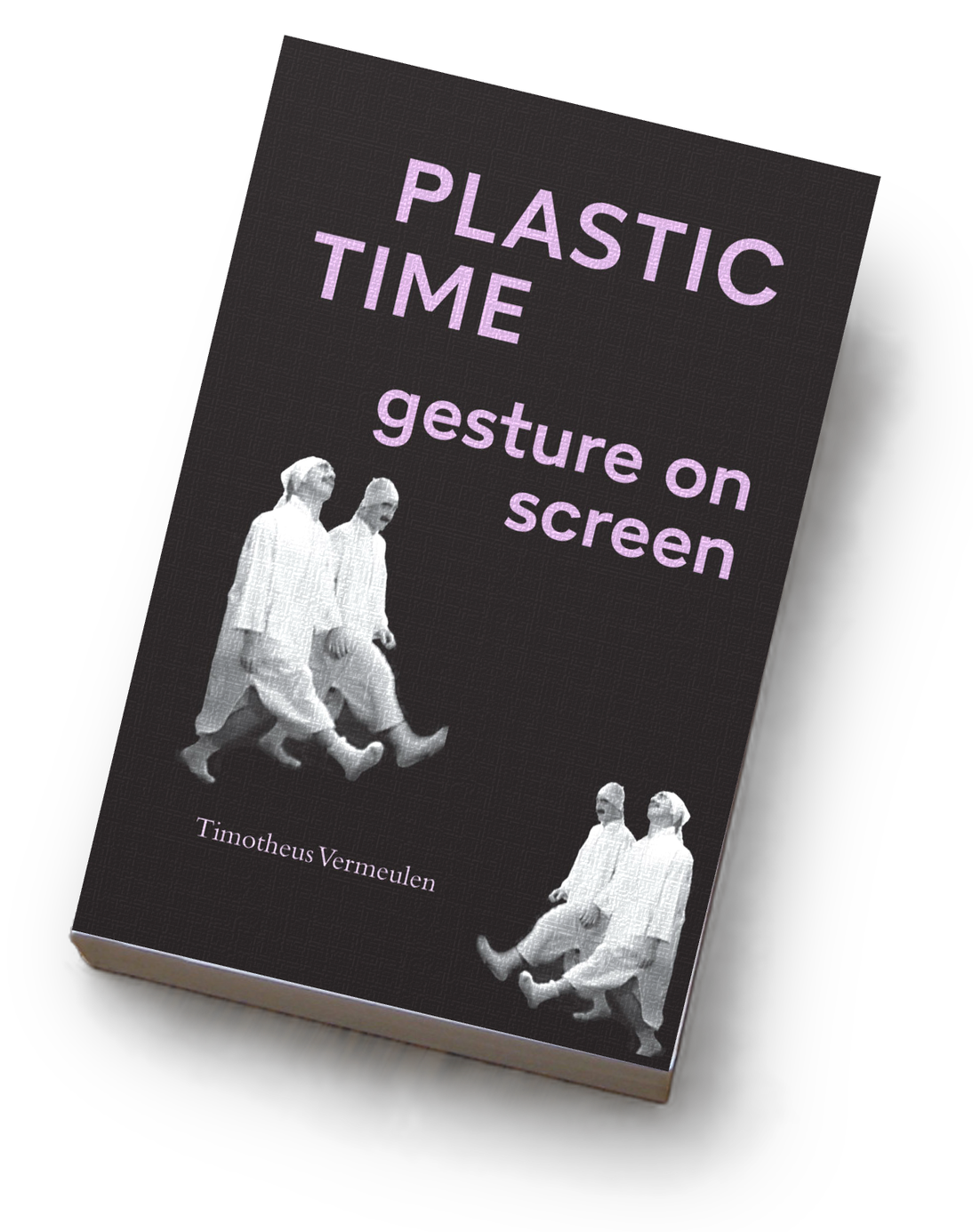
Plastic Time: Gesture on Screen
Plastic Time radically rethinks how we experience time in screen media—not through plot or montage but through performance. The book explores how actors shape time through the movements and manipulations of their bodies: a quick glance, a recurrent shrug, an awkward embrace. Drawing on examples ranging from Duck Soup to This Is America and from Gilmore Girls to Donnie Brasco, it shows how bodily gestures and facial expressions sculpt history and contemporaneity, age, rhythm and tense. Combining media theory, philosophy, and performance studies, Plastic Time argues that performance doesn’t merely represent time—it actively figures it, stretching here and contracting there, now folding together, then tearing apart. Time in film, TV, and video is not fixed but elastic, not given but constantly made and remade, molded anew; it is as plastic as the actors’ bodies that enact it.
“Like his seventeenth-century countryman Antonie van Leeuwenhoek, the so-called “Father of Microscopy,” Timotheus Vermeulen can see a universe in a droplet of water. And while those universes are magnificent—see: trauma, tragedy, contingency, the weight of history—it is the droplets that stun. A specific tip of a particular hat, an upturned chin, a rolling of the shoulder, an awkward fleeting hug: Vermeulen’s rigorous attention to the microaspects of a glorious catalogue of screen performances discovers unexpected relations, textures, and plastic possibilities of being in time”
“Vermeulen attends to bodily movements like a dance scholar, thinks about time like a philosopher, provokes like a social critic, and curates media like a cinephile—all on the way to demonstrating how, with every hat-tip, eyelid twitch, and shoulder roll, performers onscreen adjust the shape of time. A major contribution to both film theory and performance studies, Plastic Time is also a love letter to performers, whose subtlest gestural choices prove to be what moves our motion pictures”
“To conceptualize gesture as a temporal practice is a brilliant theoretical move, opening up an entirely new and unexpected terrain of investigation. Vermeulen finds in gesture an irrepressibility, an inventiveness, an openness—within which time itself is shaped. In this way, Plastic Time reimagines film in a wholly new way: as a space of temporal possibility with the capacity to reshape how we understand narrative, history and agency. ”
“Written with astonishing care for detail and philosophical vigour, Plastic Time is an expert meditation on performance and time on screen. A downward glance, an awkward hug, a compulsive shoulder roll – Vermeulen not only shows how gestures are the substance of screen media but exposes their political weight in giving shape to possibility.”